Strategic Visual Communication: Leveraging the School Education Admission Social Banner for Modern Enrollment
In the rapidly evolving landscape of educational marketing, the first point of contact between an institution and a prospective family is rarely a handshake or a brochure. It is a digital impression. As schools compete for attention in an increasingly saturated online environment, the quality, clarity, and aesthetic appeal of visual assets have become paramount. This is where the concept of the School Education Admission Social Banner transitions from a mere graphic design element to a critical strategic tool. It represents the intersection of institutional branding, digital accessibility, and user experience design.
For professionals, creators, and marketers within the education sector, understanding the utility of high-quality presentation templates is no longer optional; it is a necessity. The modern admissions cycle is driven by speed and visual literacy. Parents and students scan information quickly, making decisions based on immediate visual cues before they ever read a single paragraph of text. Consequently, the deployment of a well-structured, elegant, and professional banner can significantly influence engagement rates and conversion metrics.
The Shift Toward Professionalized Educational Branding
Historically, school marketing materials were often functional but lacked the polish seen in corporate sectors. However, this dynamic has shifted dramatically. Today’s educational institutions are expected to operate with the same level of brand sophistication as leading tech companies or lifestyle brands. The School Education Admission Social Banner serves as a microcosm of this broader trend. It is not just about announcing that admissions are open; it is about communicating the values, culture, and quality of the institution through design language.
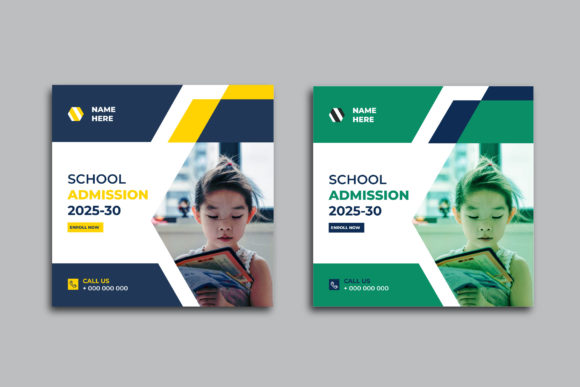
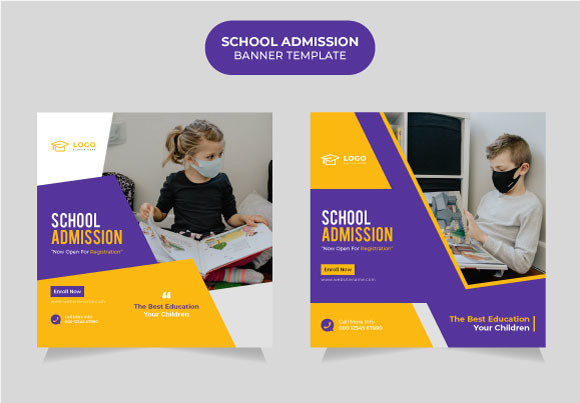
This shift is driven by changing consumer expectations. Families are more informed and discerning than ever before. They look for signals of professionalism and modernity. A cluttered, outdated, or poorly formatted social media banner can inadvertently signal administrative inefficiency or a lack of resources. Conversely, a Modern, Elegant, creative, Professional and unique layout suggests an institution that is organized, forward-thinking, and attentive to detail. This perception management is crucial in building trust before any direct interaction occurs.
Design Efficiency and Workflow Optimization
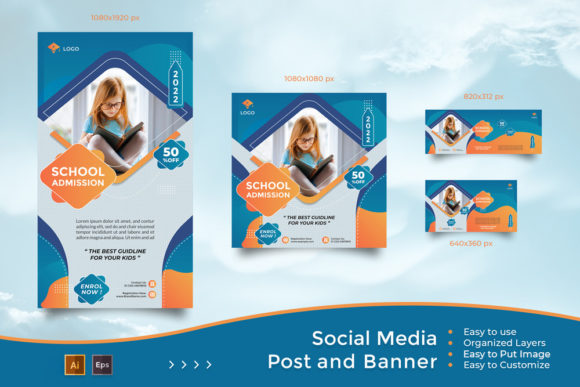
For freelancers, marketing agencies, and internal school communication teams, time is a scarce resource. The demand for high-volume content across multiple social platforms requires workflows that are both efficient and scalable. This is why templates that offer resizable and editable graphics are gaining traction. The ability to adapt a core design across various dimensions without losing fidelity is a significant advantage.
Consider the practical implications of using a template built on Master Slides. This structural approach ensures consistency across all nine slides or variations included in a comprehensive package. When a designer modifies a color palette or font choice on the master slide, those changes propagate instantly to all associated elements. This reduces the risk of human error and ensures that the final output remains cohesive. For entrepreneurs and small business owners who may not have dedicated design teams, this feature democratizes access to high-end visual communication.
Furthermore, the inclusion of vector icons and picture placeholders streamlines the customization process. The "drag and drop" functionality is not merely a convenience; it is a workflow accelerator. It allows users to focus on the message and the imagery rather than getting bogged down in technical design constraints. By utilizing free web fonts, designers also ensure that the final product is accessible and renders correctly across different devices and browsers, eliminating compatibility issues that often plague custom typography.
Contextual Relevance in a Digital-First World
The relevance of the School Education Admission Social Banner extends beyond the education sector. It reflects a larger movement toward modular, adaptable content creation. In today’s market, whether one is presenting a corporate portfolio, launching a new product, or promoting an event, the underlying principles remain the same: clarity, aesthetics, and ease of use. The template’s versatility allows it to be repurposed for various purposes, such as business presentations, corporate updates, or creative portfolios.
This cross-industry applicability highlights a key insight: good design is universal. The clean lines and structured layout that make an admission banner effective are the same elements that make a business pitch deck compelling. By adopting these standards, educational institutions align themselves with broader professional norms, enhancing their credibility in the eyes of stakeholders who value modernity and efficiency.
Technical Precision and User Experience
From a technical standpoint, the files included in such premium templates—typically AI (Adobe Illustrator) and EPS formats—offer unparalleled flexibility. These vector-based formats ensure that graphics can be scaled to any size, from a small mobile screen to a large outdoor billboard, without pixelation. This scalability is essential for omnichannel marketing strategies where the same visual asset must perform well across diverse platforms.
It is important to note that while demo images are used for preview purposes, the actual value lies in the structure and the editable components. Users are encouraged to replace placeholder images with authentic photography that reflects their specific institution. Authenticity resonates with audiences. A generic stock photo may look professional, but a genuine image of students engaged in learning creates an emotional connection. The template provides the frame; the user provides the soul.
Strategic Implementation for Maximum Impact
To fully leverage the potential of a School Education Admission Social Banner, marketers should consider the following strategic approaches:
- Consistency Across Channels: Ensure that the banner’s color scheme and typography align with the institution’s existing brand guidelines. This reinforces brand recognition and trust.
- Clear Call-to-Action: While the design provides the visual appeal, the text must drive action. Use concise, compelling language that directs viewers to the next step, whether it is visiting a website or registering for an open house.
- Mobile Optimization: Given that a significant portion of social media traffic comes from mobile devices, test how the banner appears on smaller screens. The resizable nature of vector graphics aids in this, but textual hierarchy must also be considered.
- Seasonal Adaptability: Use the editable nature of the template to create variations for different stages of the admission cycle, from early inquiry to final enrollment deadlines.
By integrating these practices, educators and marketers can transform a simple graphic into a powerful engagement tool. The goal is not just to inform, but to inspire confidence and interest.
Conclusion: Elevating Standards in Educational Communication
The adoption of sophisticated design tools like the School Education Admission Social Banner is indicative of a maturing educational marketing landscape. It reflects a recognition that visual communication is a critical component of institutional success. As technology continues to advance and audience expectations rise, the ability to produce high-quality, professional, and easily adaptable content will remain a competitive advantage.
For those involved in the creation and dissemination of educational content, investing in robust, flexible, and elegant design resources is a strategic imperative. It allows for greater creativity, improved efficiency, and ultimately, more effective communication with the communities they serve. Whether you are a seasoned designer or a school administrator managing your own marketing, embracing these modern design standards will help you navigate the complexities of digital engagement with confidence and clarity.
As we look to the future, the integration of such tools will likely become even more seamless, further blurring the lines between professional design and everyday content creation. The key is to remain adaptable, focused on quality, and attentive to the needs of your audience. In doing so, you not only enhance your visual presence but also strengthen the foundational trust that is essential for any successful educational institution.