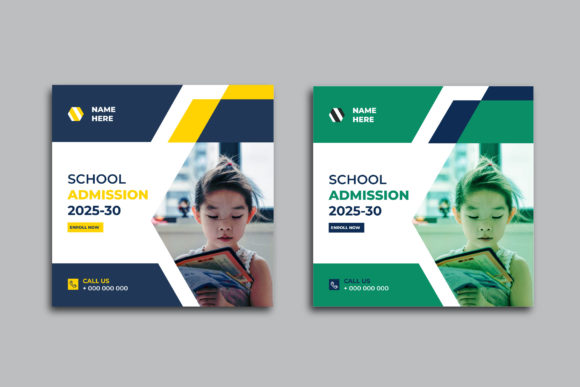
Optimizing School Admissions with Modern, Editable Social Media Templates
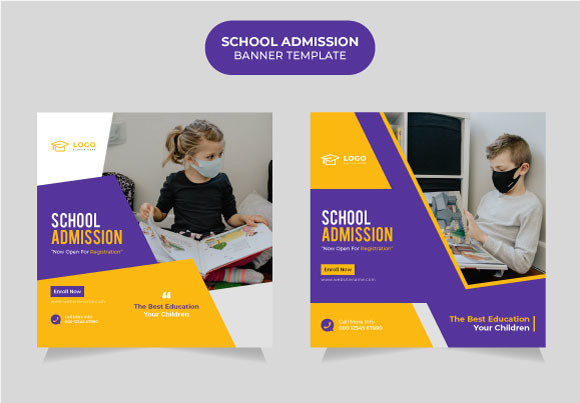
In the competitive landscape of early childhood and primary education, visibility is no longer optional. Schools must communicate their values, facilities, and academic excellence clearly to parents who are increasingly digital-first in their decision-making processes. This is where a well-crafted Kids School Education Admission Post becomes a critical asset. Unlike generic flyers or text-heavy announcements, modern admission templates offer a blend of aesthetic appeal and functional clarity, designed specifically to capture attention on social media platforms while conveying essential enrollment information.
For administrators, marketing coordinators, and school owners, understanding the distinction between a standard graphic and a professional, high-resolution template can significantly impact enrollment numbers. These resources are not merely decorative; they are strategic tools that streamline communication, ensure brand consistency, and reduce the time spent on design tasks. By leveraging editable, high-quality assets, educational institutions can present a polished image that resonates with parents aged 20 to 50, who often prioritize professionalism and clarity when evaluating potential schools for their children.
The Strategic Value of Professional Design in Education Marketing
A Kids School Education Admission Post serves as the digital front door to an institution. When parents scroll through Instagram, Facebook, or LinkedIn, they make split-second judgments based on visual cues. A cluttered, low-resolution, or poorly organized post suggests a lack of attention to detail, which may inadvertently raise concerns about the school’s operational standards. Conversely, a clean, modern, and eye-catching design signals organization, care, and modernity.
The primary advantage of using a professional template lies in its structure. These designs are typically built with hierarchy in mind, guiding the viewer’s eye from the headline—such as "Admissions Open"—to key details like age groups, contact information, and unique selling points. This organization reduces cognitive load for the reader, making it easier for them to process information quickly. Furthermore, high-resolution outputs ensure that the graphics look crisp on all devices, from large desktop monitors to small smartphone screens, maintaining credibility across all touchpoints.
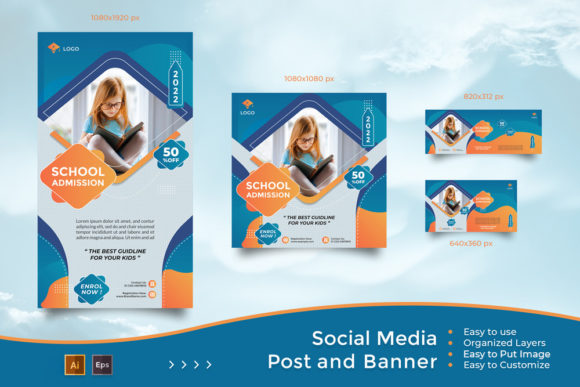
Another significant benefit is the ease of customization. Most premium templates come with layered files, such as AI (Adobe Illustrator) or high-quality JPEGs with editable text fields. This allows school staff without advanced graphic design skills to update dates, change colors to match school branding, or insert specific logos effortlessly. The use of free fonts further enhances accessibility, ensuring that the design remains consistent even if the original designer is unavailable. This flexibility is crucial during peak admission seasons when last-minute updates are common.
Comparing Template-Based Designs with Custom Agency Work
When considering how to promote admissions, schools often face a choice between hiring a custom design agency or utilizing pre-made, professional templates. Each approach has distinct tradeoffs regarding cost, time, and creative control.
Custom agency work offers unparalleled uniqueness. A dedicated team will create a brand identity from scratch, ensuring that every pixel aligns with a long-term strategic vision. However, this route is often prohibitively expensive for smaller private schools or preschools and requires significant lead time. Revisions can be slow, and the final product may still require multiple rounds of feedback to meet expectations.
In contrast, a Kids School Education Admission Post template provides a balanced alternative. These designs are created by experienced professionals who understand current design trends, color psychology, and layout best practices. While they are not one-of-a-kind, they offer a high level of polish at a fraction of the cost. For most schools, the goal is not to reinvent the wheel but to communicate effectively. Templates allow institutions to achieve a premium look without the premium price tag. They are particularly effective for seasonal campaigns, such as annual admissions, where speed and efficiency are paramount.
Moreover, templates offer immediate usability. Once downloaded, the file is ready for editing. There is no need for lengthy briefings or waiting periods. This immediacy allows schools to react quickly to changes in enrollment capacity or to capitalize on trending topics in education. For schools with limited marketing budgets, this resource efficiency is invaluable.
Evaluating File Formats and Technical Requirements
Understanding the technical aspects of these design resources is essential for maximizing their utility. Most professional templates are provided in multiple formats, typically including AI files and JPEGs. The AI file is the source document, allowing for deep customization. Users can move elements, change shapes, and adjust vector graphics without losing quality. This format is ideal for schools with access to Adobe Illustrator or compatible software.
For those without specialized design software, high-resolution JPEG files offer a practical alternative. While less flexible than vector files, modern JPEG templates are often designed with clear zones for text overlay. Users can add text using basic tools like Canva, PowerPoint, or even mobile apps. The key is to ensure that the base image is high resolution, typically 300 DPI for print or optimized dimensions for social media, to prevent pixelation.
The use of free fonts is another critical feature. Proprietary fonts can create licensing issues and compatibility problems when sharing files among staff. By sticking to widely available, free fonts, schools ensure that the design looks exactly as intended on any computer. This standardization simplifies collaboration between administrative staff, teachers, and marketing teams, reducing the risk of formatting errors.
Identifying the Right Fit for Your Institution
While templates are powerful, they are not a universal solution for every marketing need. A Kids School Education Admission Post is best suited for specific scenarios: announcing open houses, highlighting new facilities, promoting early-bird discounts, or sharing general enrollment timelines. These are high-volume, repetitive communications where consistency and speed matter more than radical innovation.
However, there are situations where a more bespoke approach may be necessary. If a school is undergoing a major rebranding, launching a completely new educational program, or addressing a sensitive community issue, a generic template may feel impersonal. In these cases, investing in custom content that tells a unique story may yield better results. Additionally, if a school’s branding is highly complex with specific patterns or illustrations that do not fit standard layouts, a template might require extensive modification, negating its time-saving benefits.
It is also important to consider the platform. Social media algorithms favor native content. While a beautiful static image is effective, combining these templates with short video clips, testimonials, or live Q&A sessions can enhance engagement. The template serves as the visual anchor, but the surrounding content provides the depth that parents seek during their research phase.
Practical Tips for Maximizing Impact
To get the most out of a Kids School Education Admission Post, schools should focus on clarity and call-to-action. Ensure that the most important information—such as the deadline for application or the website URL—is prominent. Avoid cluttering the design with too much text; instead, use the caption area of the social media post to provide detailed information.
- Maintain Brand Consistency: Adjust the template colors to match your school’s official palette. This reinforces brand recognition over time.
- Use High-Quality Imagery: Replace stock photos with authentic images of your campus, students, and teachers. Authenticity builds trust with prospective parents.
- Test Different Variations: Use A/B testing to see which design elements resonate more with your audience. Try different headlines or color schemes to optimize engagement.
- Ensure Mobile Optimization: Most parents will view these posts on mobile devices. Check that text is legible and buttons or links are easily clickable on smaller screens.
Ultimately, the goal is to facilitate an informed decision for parents. By providing clear, attractive, and professional information, schools reduce friction in the admissions process. A well-designed post does not just attract attention; it invites inquiry and builds confidence in the institution’s capabilities.
In conclusion, integrating a modern, editable Kids School Education Admission Post into your marketing strategy offers a pragmatic balance between quality and efficiency. It allows educational institutions to compete visually with larger organizations while maintaining the agility needed to respond to market demands. Whether you are a small preschool or a growing primary school, these resources provide a foundational tool for effective communication, helping you connect with families who are searching for the best educational environment for their children.