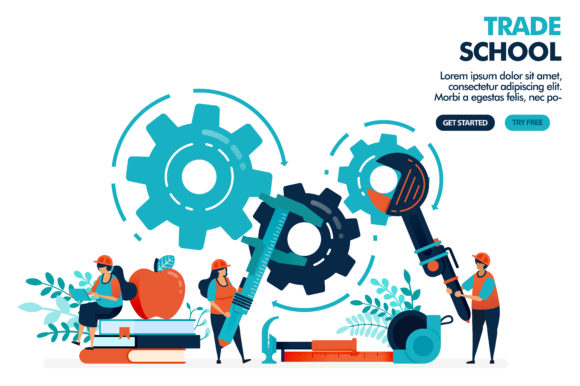
Illustration of Repair Learning: Visualizing the Path to Vocational Mastery
In an era where digital skills often dominate the conversation, there is a profound and growing appreciation for tangible, hands-on expertise. The Illustration of Repair Learning serves as more than just a decorative element; it is a powerful visual narrative that captures the essence of vocational education. Whether you are designing a landing page for a trade school, creating a banner for a community college program, or developing educational materials for a technical workshop, these visuals communicate competence, precision, and the dignity of skilled labor. By leveraging high-quality vector illustrations of people learning to repair machines, institutions can bridge the gap between abstract curriculum goals and the concrete reality of career readiness.
Bridging the Gap Between Theory and Practice
One of the primary challenges in promoting vocational education is overcoming outdated perceptions. Many prospective students and their families still view trade schools as a secondary option to traditional four-year universities. However, the modern landscape of vocational education is one of high technology, critical thinking, and essential infrastructure maintenance. An effective Illustration of Repair Learning disrupts these old narratives by showcasing diverse individuals engaged in complex problem-solving. When a viewer sees a detailed vector image of a student diagnosing an engine fault or calibrating industrial machinery, they do not see "lesser" education; they see specialized expertise.
These illustrations address a specific need in marketing and educational design: the need for clarity. Text-heavy brochures often fail to convey the dynamic nature of hands-on training. In contrast, a well-designed graphic instantly communicates the environment. It shows safety gear, specialized tools, and focused mentorship. This visual shorthand helps adult learners quickly identify if a program aligns with their learning style. For those who thrive in kinetic, practical environments, seeing themselves represented in an Illustration of Repair Learning validates their choice to pursue a trade.
Enhancing Digital Presence with Scalable Assets
For web designers and marketers, the technical quality of visual assets is paramount. The demand for files that are both high-resolution for print and scalable for web use has never been higher. This is where the utility of vector formats, such as editable EPS 10 files, becomes indispensable. Unlike raster images like JPGs, which can pixelate when resized, vector illustrations maintain crisp lines and vibrant colors at any scale. This flexibility allows a single Illustration of Repair Learning to be used across multiple platforms without loss of quality.
Consider the workflow of a university admissions team. They may need a small icon for a mobile app, a medium-sized banner for a social media campaign, and a large-format poster for a career fair. Using a versatile vector template ensures brand consistency across all these touchpoints. The ability to edit colors, adjust compositions, and isolate elements within an EPS file means that the illustration can be tailored to match specific institutional branding guidelines. This adaptability not only saves time but also reduces the cost associated with commissioning custom artwork for every new campaign.
Practical Applications in Educational Marketing
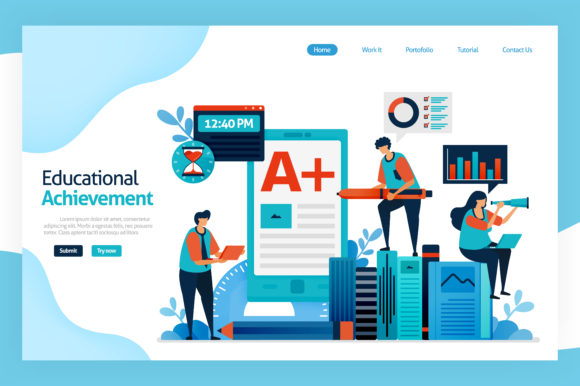
The application of these visuals extends far beyond simple decoration. In the context of a landing page, an Illustration of Repair Learning can serve as a focal point that guides the user’s eye toward key calls to action. For instance, an image depicting a mentor guiding a student through a repair process can be paired with text about apprenticeship opportunities. This creates an emotional connection, suggesting support, guidance, and successful outcomes. It transforms the abstract concept of "education" into a tangible journey of skill acquisition.
Furthermore, these illustrations are invaluable for internal training materials. Technical manuals and safety guides often suffer from dense text that can be difficult to digest. Incorporating clear, step-by-step vector graphics can enhance comprehension and retention. When learners can visually trace the steps of a repair procedure, they are better prepared for hands-on practice. This dual use—external marketing and internal instruction—maximizes the return on investment for educational institutions purchasing or creating these assets.
Catering to Diverse Learner Profiles
Adult learners seeking vocational training come from varied backgrounds. Some are career changers looking for stability, while others are recent high school graduates seeking a direct path to employment. Their motivations and concerns differ, and so too should the way we present educational opportunities. An Illustration of Repair Learning can be adapted to resonate with these different groups. For the career changer, imagery that emphasizes professionalism, advanced technology, and career advancement is key. For younger students, visuals that highlight teamwork, innovation, and modern workplace culture may be more appealing.
It is also crucial to represent diversity in these illustrations. Vocational fields have historically lacked representation in terms of gender and ethnicity. Modern vector templates should reflect the inclusive reality of today’s workforce. Seeing women, minorities, and individuals of various ages engaged in repair and maintenance tasks sends a powerful message of belonging. It signals that the institution values diversity and is committed to providing equal opportunities for all students. This inclusivity is not just a moral imperative; it is a strategic advantage in attracting a broader pool of talented applicants.
Implementation Strategies for Maximum Impact
To fully leverage the potential of these visual assets, educators and marketers must integrate them thoughtfully into their content strategy. Here are several recommendations for effective implementation:
- Contextual Relevance: Ensure that the specific type of repair depicted matches the program being advertised. An illustration of automotive repair should not be used to promote an HVAC program. Specificity builds trust and demonstrates attention to detail.
- Emotional Resonance: Choose images that convey confidence and satisfaction. The body language of the figures in the Illustration of Repair Learning should suggest mastery and pride in workmanship. Avoid images that depict frustration or confusion unless they are part of a before-and-after narrative showing problem resolution.
- Clear Call to Action: Use the illustration to frame your call to action. If the image shows a student completing a task, place the "Apply Now" or "Learn More" button nearby to create a logical flow from inspiration to action.
- Mobile Optimization: Given that many prospective students browse on mobile devices, ensure that the key elements of the illustration are visible and impactful on smaller screens. Simplify complex scenes for mobile banners to maintain clarity.
Conclusion: Investing in Visual Communication
The Illustration of Repair Learning is a vital tool in the modern educator’s toolkit. It transcends aesthetic appeal to become a functional component of communication, helping to clarify, inspire, and inform. By investing in high-quality, editable vector assets, institutions can create a cohesive and compelling visual identity that resonates with adult learners. These images do more than decorate a webpage; they validate the importance of skilled trades and illustrate a clear path to professional success. As the demand for vocational skills continues to rise, the ability to effectively communicate the value of this education through powerful visuals will remain a key differentiator for leading institutions. Embrace these resources to build a bridge between potential students and their future careers, ensuring that the message of practical, hands-on learning is seen, understood, and valued.